
When I lived in Hong Kong, there wasn’t a day that passed during those years when a sight, smell, or interaction didn’t astound me at some point. Energy emanates from every winding bend in the road, every double-decker bus and tram that “ding dings” along, and every intersection where movement is incessantly frenetic. Hong Kong’s pulse spills into the harbor like a fresh rainstorm washing down the peak through the city to the ferry terminals.
One sight during those years never ceased to amaze me: whenever a building exterior needed renovation or the newest, shiniest, skyscraper began rising up like a futuristic omen, bamboo scaffolding enabled these projects. The sight of bamboo wrapped around a building is a striking image — an emblematic testament to the power of nature and the ingenuity of humanity wrapped into a single structure. I couldn’t help but crane my neck each time I walked through a sidewalk bamboo underpass with scaffolding rising above.
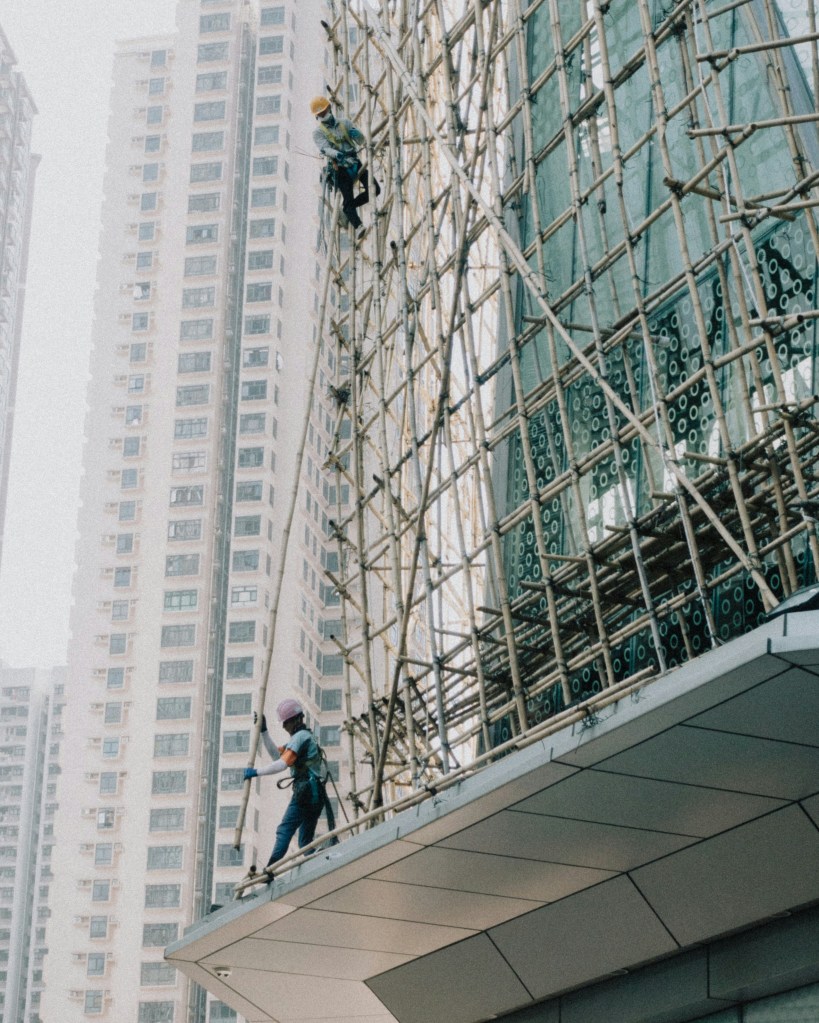
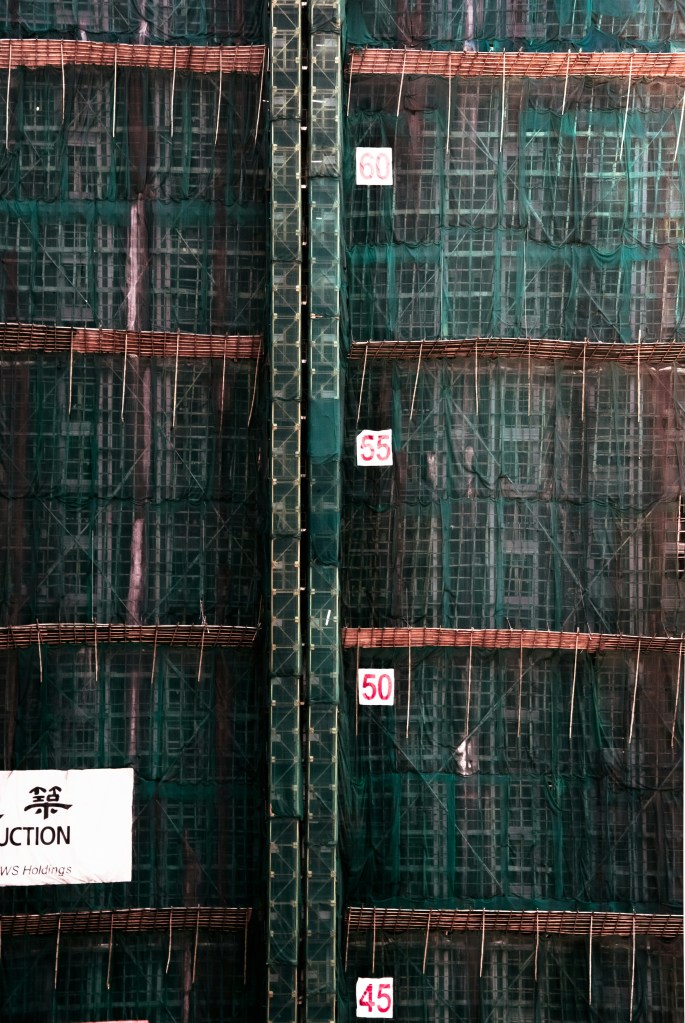
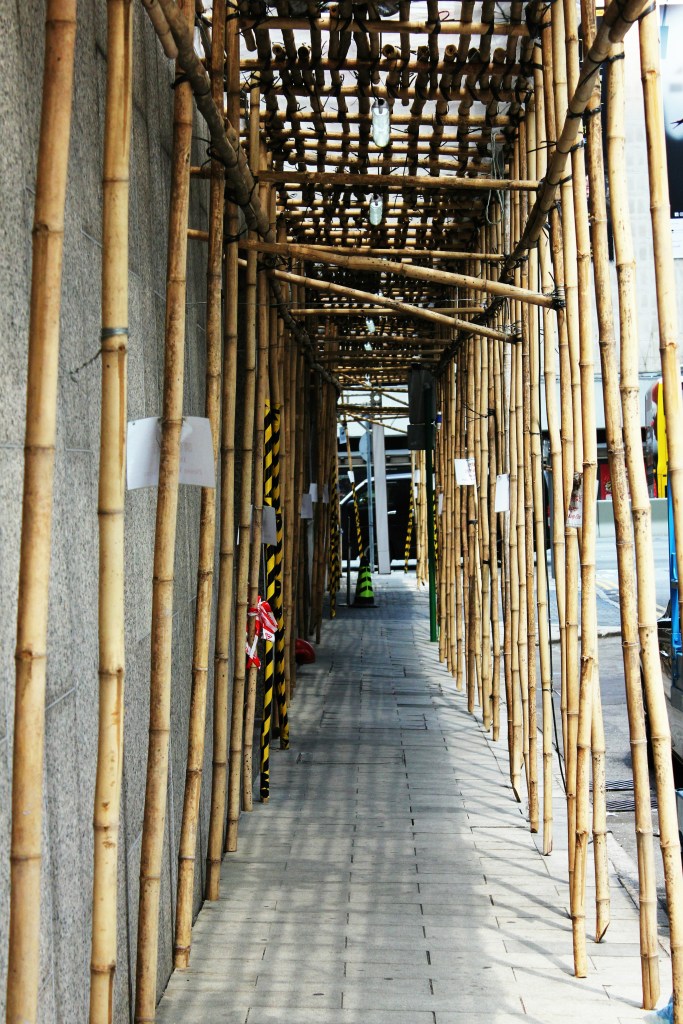
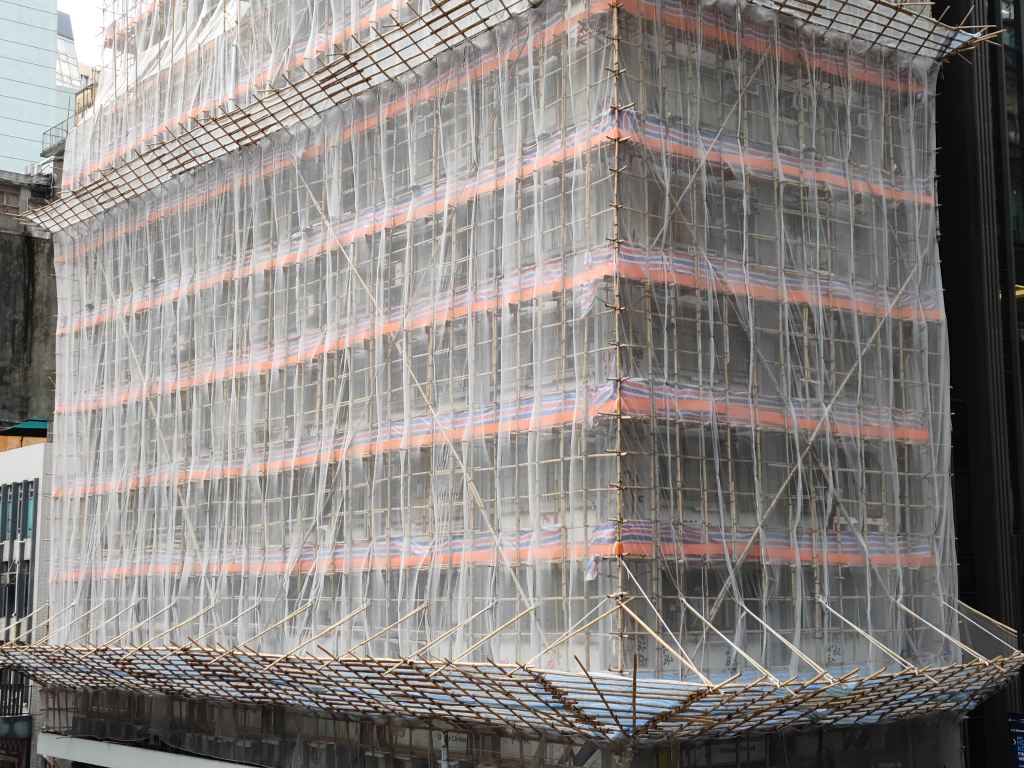
Two types of bamboo are typically used for scaffolding: Kao Jue (pole bamboo) is thinner and used for bracing and Mao Jue (hair bamboo) is thicker and used as load bearing support. Bamboo Scaffolders, known as Taap Pang in Cantonese, are skilled artisans at the top of their craft: they reject modern methods, using primarily bamboo poles and plastic ties as their tools. As of 2022, there were 2,479 registered bamboo scaffolders in Hong Kong. Taap Pang meticulously connect the bamboo, tying it and installing steel brackets to support the structure — eventually stacking layers of scaffolding until it reaches higher heights than you’d assume feasible.
Bamboo serves as an ideal material given it is “one of the fastest-growing plants in the world, and in some cases can grow 60cm a day, and eventually 40 metres tall. Bamboo has thick underground roots called rhizomes, which can grow quickly, creating new shoots metres away. Bamboo’s internal cell-like structure allows it to withstand compression, making it an ideal material for scaffolding (SCMP).”
These techniques have existed for thousands of years and yet the buildings that rise from them are some of the most ultra modern in human history, designed by the likes of I.M. Pei and famous architectural firms from around the world. Hong Kong has over 9,000 high rise buildings, of which over 4,000 are skyscrapers standing taller than 100 m (328 ft) with over 500 buildings above 150 m (492 ft). The culmination of the above inspires awe no matter what angle you’re viewing from — check out this video for a glimpse:
If you’re an operations professional or any builder on a team, you’re probably familiar with analogies of an engine room, a house foundation, or scaffolding as a comparison for what operations teams are meant to do: provide the support necessary to build or scale an organization, whether it’s the first story or the eightieth. The scaffolding analogy for an operational function gives a great sense of partnership across teams – all teams must operate effectively in tandem to grow and evolve simultaneously.
Scaffolding is built piece by piece, day by day. By nature, bamboo scaffolding is permeable with gaps between risers — it’s not essential to fill every hole to have stability. Scaffolding can also be disassembled and moved elsewhere to support growth where needed in real time – it’s an agile material. Bamboo offers regenerative strength and inspiration, both literally and figuratively.
Beyond these high level impressions, bamboo scaffolding may provide several operational lessons for mission driven organizations and operational leaders:
- Remember the goal: given that Taap Pang work at such a rapid pace to build and dismantle scaffolding, the underlying goal is always central to the process — the goal isn’t to build the scaffolding (i.e. operational infrastructure) for the sake of the scaffolding, the goal is to build scaffolding to enable the building to rise. This lesson is essential to ensure operational focus doesn’t overemphasize tools, systems, and processes as the primary goal — the building is the goal, not the scaffolding.
- Often the simplest method is the best for scale: sometimes all you’ll need are bamboo poles and plastic ties to fix the scaffolding in place. Bamboo doesn’t require sophisticated techniques, machinery or complexity — it’s a recurring practice with minimal tools that emphasizes skills, teamwork, and technique over complexity.
- Flexibility is essential: bamboo is a flexible material that can adapt to different building structures and allow for design creativity in the structure it’s supporting. For operations teams, it’s essential to build a framing that is consistent, but allows for underlying adaptation and iteration across teams – often easier said than done in practice.
- Trust the structure, but check your footing: Taap Pang (Bamboo Scaffolders) are confident in what they’ve built, but they still look down before taking steps at those heights. If a tie needs to be replaced, it’s replaced to ensure the stability of the structure in it’s entirety. Sometimes it’s important to focus on a single tie or minute task in order to ensure the stability of a larger plan or structure.
- Plan to build and to dismantle: compared to steel, bamboo is much lighter, six times faster to erect and twelve times faster to dismantle. Often it’s just as important to plan for how long it will take to adapt and wind down in order to use resources elsewhere: the need to dismantle projects may become necessary. Using agile methods that can be scaled up and down, or approaches to outsourcing or office management that have the ability to scale in tandem with need can be essential, especially in today’s remote and tech enabled work environments.
Bamboo scaffolding can serve as an inspiring vision, whether it’s aesthetic or theoretical — a natural, flexible, permeable structure that enables construction to rise to ultimate heights. As we all continue constructing and deconstructing with tools, principles, teams, and organizations, it might be worth taking note of the lessons that bamboo scaffolding and Taap Pang can teach us. When in doubt, remember that the city with the most skyscrapers in the world was built with bamboo and artisans that know how to wield their tools with purpose and shared commitment to an end goal.
Reflection Questions:
- What lessons can you learn from bamboo scaffolding that aren’t listed above?
- How do you think about scaffolding your life and your organization?
- How do you delineate between your organization’s scaffolding and building? What’s the purpose of your scaffolding? What’s the purpose of your building? Are they intertwined or distinct?
Resources:
https://multimedia.scmp.com/infographics/culture/article/3183200/bamboo-scaffolding/index.html
Featured Photo by Mark Hang Fung So on Unsplash, Hong Kong Worker Photo by Rex on Unsplash, Building Photo by Cheung Yin on Unsplash, Workers on building photo by Catgirlmutant on Unsplash, Bamboo Photo by Clement Souchet on Unsplash




Leave a comment